
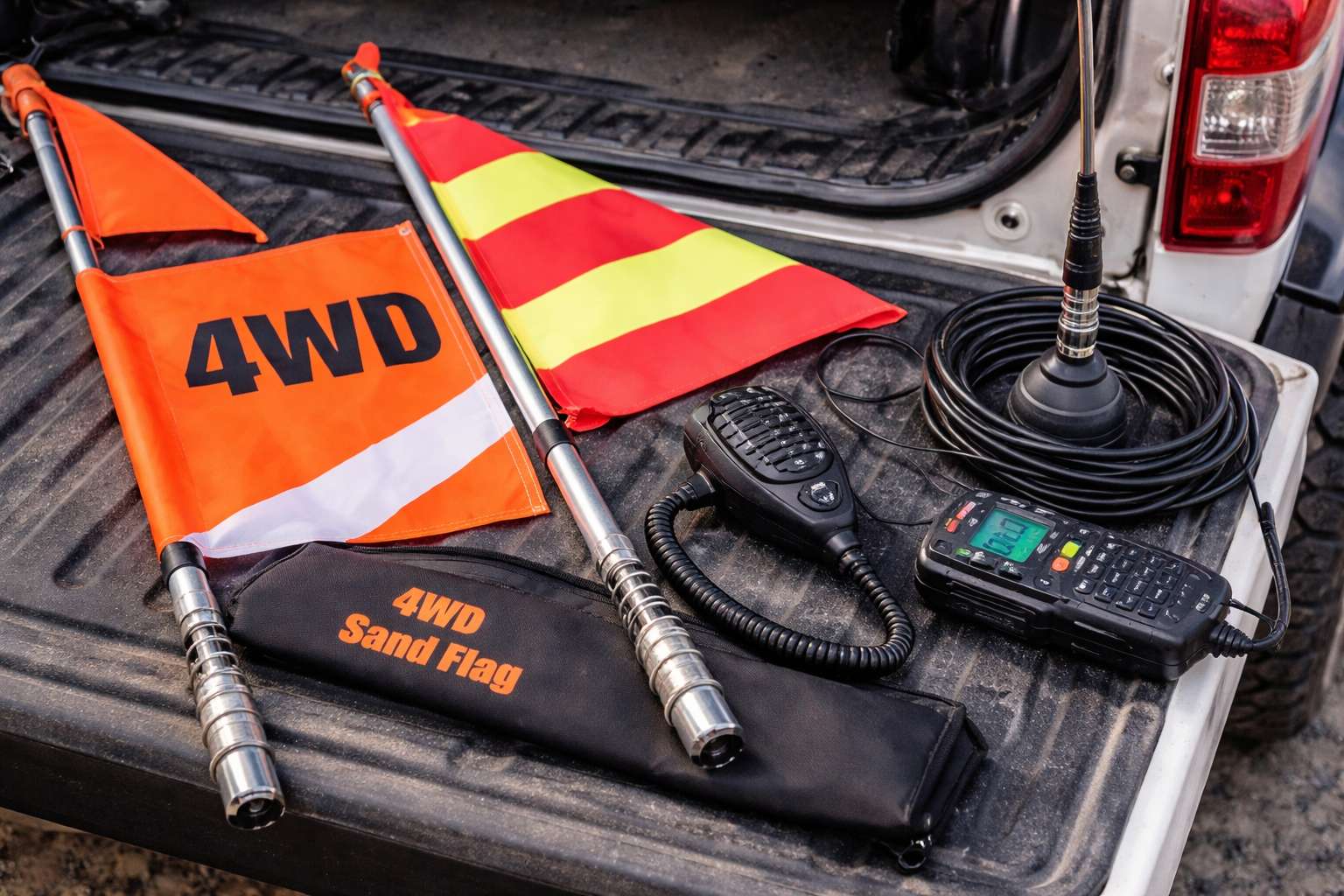
Sand Flags vs UHF Radios Which One is More Important on Remote Tracks
Both are important but serve different purposes. Sand flags improve visibility on dunes and blind crests, while UHF radios allow communication between vehicles. The safest setup includes both.
When should you use a sand flag?
Sand flags should be used in sand dunes, beaches and any terrain with blind crests. They make your vehicle visible to others before you come into view.
When is a UHF radio essential off-road?
UHF radios are essential for convoy driving, coordinating recoveries and communicating hazards on remote tracks where mobile reception is unavailable.
Why Safety Equipment Matters on Remote Tracks
Remote off-road tracks across Australia often combine limited visibility with limited communication. Drivers may encounter blind crests, narrow tracks and unpredictable terrain where visibility and awareness are reduced. Having the right safety equipment helps prevent accidents and improves coordination between vehicles. Sand flags and UHF radios are two of the most common tools used to manage these risks.
What Sand Flags Do Best
Sand flags are designed to solve visibility problems. Mounted high on a vehicle, they allow other drivers to see you before your vehicle becomes visible, especially over dunes and rises. In environments like beaches and desert tracks, this early warning can prevent head-on collisions. The flag’s height and bright colour make it easy to spot even when terrain blocks direct line of sight. Sand flags are simple, reliable and require no power or setup once installed.
What UHF Radios Do Best
UHF radios focus on communication. They allow drivers to talk to each other in real time, share track conditions and coordinate movements. This is especially useful when travelling in groups or navigating unfamiliar terrain. Drivers can warn others about obstacles, oncoming vehicles or changes in conditions. Unlike sand flags, UHF radios rely on active use. Their effectiveness depends on clear communication and proper channel use.
Differences Between the Two
Sand flags provide passive safety. They work automatically by increasing visibility without requiring any action from the driver. UHF radios provide active safety. They depend on communication between drivers to share information and coordinate actions. Each tool addresses a different risk. Sand flags reduce collision risk in low-visibility areas, while UHF radios improve awareness and coordination across wider distances.
Where Sand Flags Are More Important
In dune environments and areas with frequent blind crests, sand flags are often the most critical safety tool. Visibility is the main risk in these conditions, and communication alone cannot replace being seen. Even if a radio is used, a vehicle without a sand flag may still be difficult to detect until it is too late.
Where UHF Radios Are More Important
On long remote tracks, forest trails or convoy trips, UHF radios become more important. They allow drivers to stay connected, share updates and manage group movement. In these environments, visibility may not always be the main issue, but communication plays a key role in maintaining safety.
Why the Best Setup Uses Both
Sand flags and UHF radios are not alternatives. They are complementary tools that work together to improve safety. A sand flag ensures your vehicle is seen, while a UHF radio ensures you can communicate. Using both provides a more complete safety system that addresses multiple risks at once.
Common Mistakes Drivers Make
One common mistake is relying on only one form of safety equipment. Using a radio without a sand flag can leave you invisible on dunes. Using a sand flag without communication limits your ability to coordinate with others. Another mistake is not using equipment correctly. Radios require proper channel selection and clear communication, while sand flags must be mounted at the correct height to be effective.
Building a Safer Off-Road Setup
A well-prepared 4WD setup includes both visibility and communication tools. Adding these to your gear list improves awareness and reduces the likelihood of accidents. Combined with good driving practices, they form part of a responsible approach to off-road travel.
Sand flags and UHF radios both play essential roles in off-road safety. One improves visibility, the other improves communication. Each addresses a different risk that drivers face on remote tracks. For Aussie 4WDers exploring dunes, beaches and remote trails, the safest choice is not one or the other. It is using both together to create a more complete and reliable safety setup.