Off-Road Essentials: When and How to Use Recovery Straps
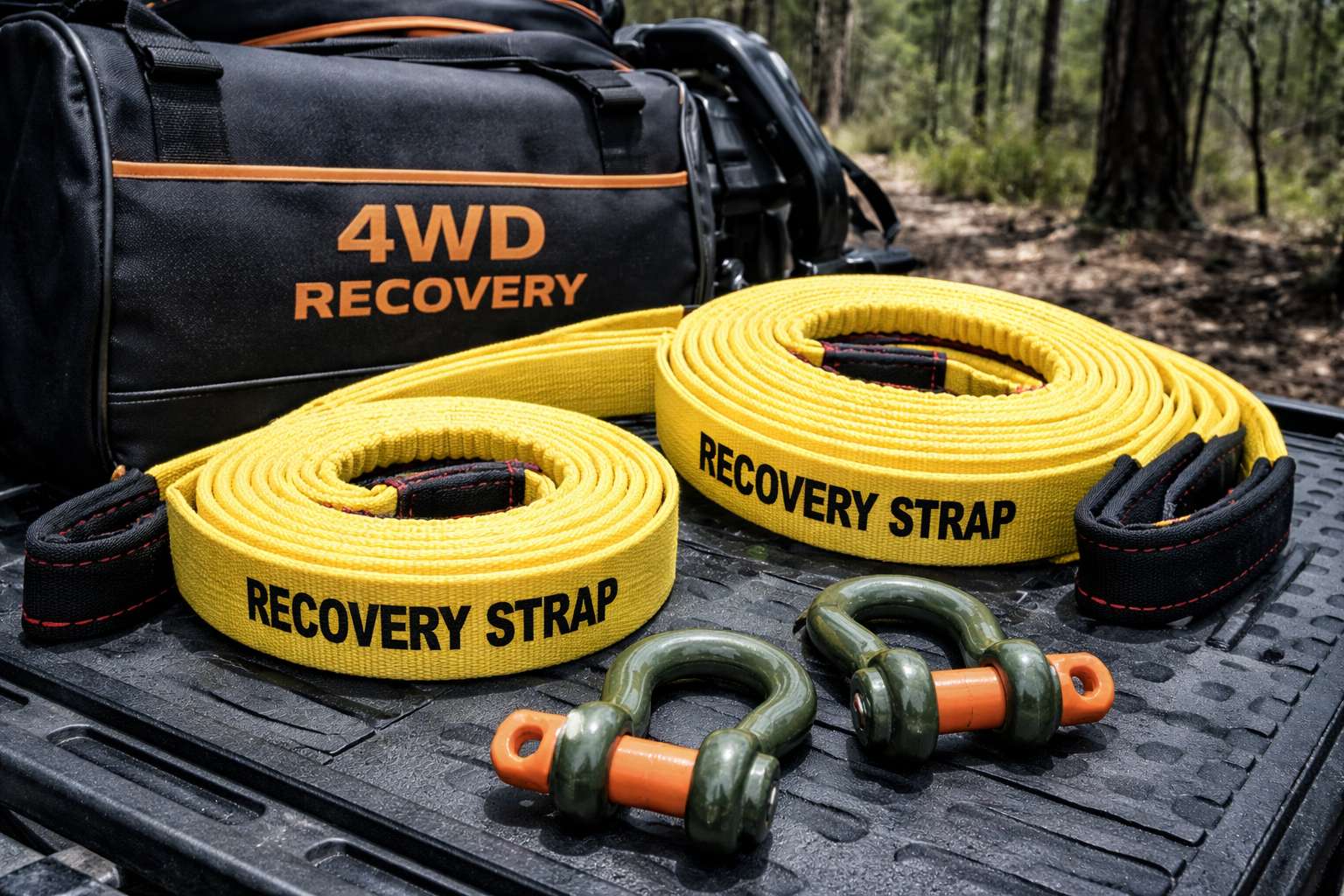
A recovery strap is a flexible towing strap designed to help free a bogged 4WD by transferring controlled pulling force from one vehicle to another. It stretches under load to reduce shock and assist vehicle recovery in sand, mud or soft terrain.
When should a recovery strap be used off-road?
Recovery straps should be used when a vehicle is bogged and cannot drive out under its own power. They are most effective in sand, mud and loose surfaces where traction is limited but vehicles can still move.
Why is the correct use of recovery straps important?
Correct use reduces the risk of vehicle damage and serious injury. Recovery straps store energy under load, so proper attachment points, spacing and technique are critical for safe off-road recovery.
Why Recovery Straps Are an Off-Road Essential
Getting bogged is part of off-road driving in Australia. Beaches, muddy tracks, river crossings and soft trails can catch out even experienced drivers. Recovery straps provide a simple and effective way to get moving again without relying on winches or heavy equipment. Because they are lightweight and easy to store, recovery straps are one of the most common tools carried by Aussie 4WDers.
How Recovery Straps Work
Recovery straps are designed to stretch when tension is applied. This stretch stores kinetic energy, which is then released to help pull a bogged vehicle free in a controlled way. Unlike rigid tow straps, recovery straps soften the initial load. This reduces sudden shock to vehicles and recovery points, making them more suitable for off-road recoveries in soft terrain.
When a Recovery Strap Is the Right Tool
Recovery straps work best when a bogged vehicle still has some traction and can assist the recovery by gently accelerating. They are ideal for sand driving, beach recoveries and muddy tracks where vehicles are stuck but not buried to chassis depth. They are not suitable for vehicles that are fully bellied out or stuck against solid obstacles. In those cases, digging, traction boards or winching may be safer options.
Choosing the Right Recovery Strap
The correct strap rating is essential for safety. A recovery strap must be rated to suit the weight of the vehicles involved. Using an under-rated strap increases the risk of failure, while an over-rated strap may not stretch correctly. Length also matters. Recovery straps need enough distance to allow gradual tension build-up without excessive speed. Matching the strap to your vehicle size and trip style helps ensure effective recoveries.
Correct Attachment Points Matter
Recovery straps must only be attached to rated recovery points. These points are designed to handle recovery loads safely. Tow balls, tie-down points and un-rated brackets should never be used. Incorrect attachment points can fail under load and become dangerous projectiles.
Step-by-Step Safe Use Overview
Before recovery begins, both drivers should agree on a clear plan. Vehicles should be aligned straight, with minimal slack in the strap. The recovering vehicle should pull away slowly, allowing the strap to stretch rather than jerk. The bogged vehicle should be assisted by gently accelerating when the strap tightens. Once free, both vehicles should stop and disconnect safely before moving off.
Common Mistakes to Avoid
One of the most common mistakes is using excessive speed. Recovery straps are designed to stretch, not snap tight at high speed. Another mistake is standing too close during recovery. Spectators should stand well clear, as straps and fittings can fail unexpectedly. Skipping basic checks, such as strap condition and attachment security, also increases risk.
Recovery Straps vs Other Recovery Gear
Recovery straps are best for quick, straightforward recoveries. They are faster to deploy than winches and require less setup. However, they are not a universal solution. In difficult or high-risk situations, other recovery methods may be safer. Knowing when to switch tactics is part of responsible off-road driving.
Responsible Off-Road Recovery
Safe recovery protects people, vehicles and the environment. Using the right gear correctly reduces track damage and prevents accidents. Carrying recovery straps without understanding how to use them properly can be more dangerous than not carrying them at all. Knowledge and preparation go hand in hand.
Recovery straps are a fundamental part of any off-road recovery kit. When used correctly, they provide an effective and efficient way to free bogged vehicles in common Australian conditions.
Understanding when to use a recovery strap, how it works and how to use it safely helps ensure Off Road Equipment trips stay enjoyable rather than dangerous. For Aussie 4WDers, recovery straps are not optional gear; they are essential equipment.