Understanding GVM Upgrades and Why You Might Need One
If you own a 4WD in Australia, whether for touring, towing, or work, chances are you’ve heard the term GVM Upgrade thrown around. But what exactly is a GVM upgrade? And more importantly, do you need one? Let’s take a closer look.
What is GVM?
GVM, or Gross Vehicle Mass, is the maximum legal weight of your vehicle when fully loaded, which includes:
- The weight of the vehicle itself
- Driver and passengers
- Fuel and fluids
- Tools, camping gear, and luggage
- Aftermarket accessories like bull bars, roof racks, and winches
- Any trailers or caravans you might be towing (affecting your vehicle’s load indirectly)
The GVM figure is set by the manufacturer and is listed on your compliance plate or in your owner’s manual.
Why GVM Matters
If your fully loaded 4WD exceeds its GVM, you’re not just risking fines and mechanical damage, you’re also breaching insurance terms and putting yourself and others in danger.
Exceeding GVM can cause:
- Poor braking performance
- Excessive wear on suspension and tyres
- Reduced stability and handling
- Increased risk of component failure
- Potential legal and insurance issues if you’re involved in an accident
Modern 4WDs are designed to do a lot, but once you start adding aftermarket gear and load them up for touring or work, it’s surprisingly easy to exceed the factory GVM.
What is a GVM Upgrade?
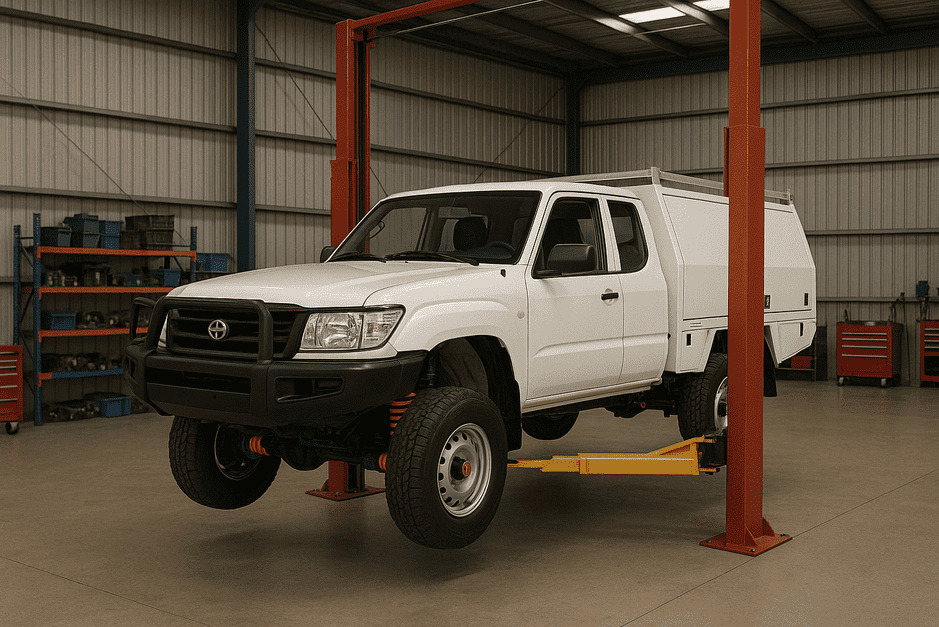
A GVM Upgrade involves replacing and strengthening key components of your vehicle’s suspension system, often including heavier-duty springs, shock absorbers, bushes, and other load-bearing parts, to allow it to legally carry more weight.
When You Might Need a GVM Upgrade
You should seriously consider a GVM upgrade if:
- You’re Touring or Travelling Long Distances
Full fuel tanks, water tanks, camping setups, spare tyres, rooftop tents, fridges, it adds up fast! - You’re Towing a Caravan or Trailer
Even though the trailer has its own weight, the tow ball download (the downforce from the trailer onto the tow hitch) counts toward your GVM. - You’re Fitting Heavy Accessories
Bull bars, winches, dual batteries, drawers, long-range fuel tanks, and rooftop gear can easily push you over the limit. - You’re Using Your 4WD for Work
Tradies, farmers, and miners often carry heavy tools, materials, and equipment every day. - You Want Peace of Mind and Insurance Compliance
Staying within your legal GVM protects your insurance validity and ensures your vehicle performs safely under load.
Types of GVM Upgrades
Pre-Registration GVM Upgrades
- Applied before your vehicle is first registered.
- Allows a higher GVM to be listed from the new.
- Ideal for brand-new vehicle buyers who know they’ll need extra capacity.
Post-Registration GVM Upgrades
- Available for vehicles already on the road.
- Requires engineering approval and certification.
- We assist with inspections and compliance paperwork to get your upgrade fully legal.
If you’re serious about working on your 4WD to its full potential, a GVM upgrade is one of the smartest investments you can make. It protects your vehicle, keeps you legal, and ensures safe, comfortable driving, whether you’re exploring the Outback, hauling tools across town, or towing a caravan across the city.